
By Billy Bussey | September 3, 6:00 AM EDT
Leaven in the Lump
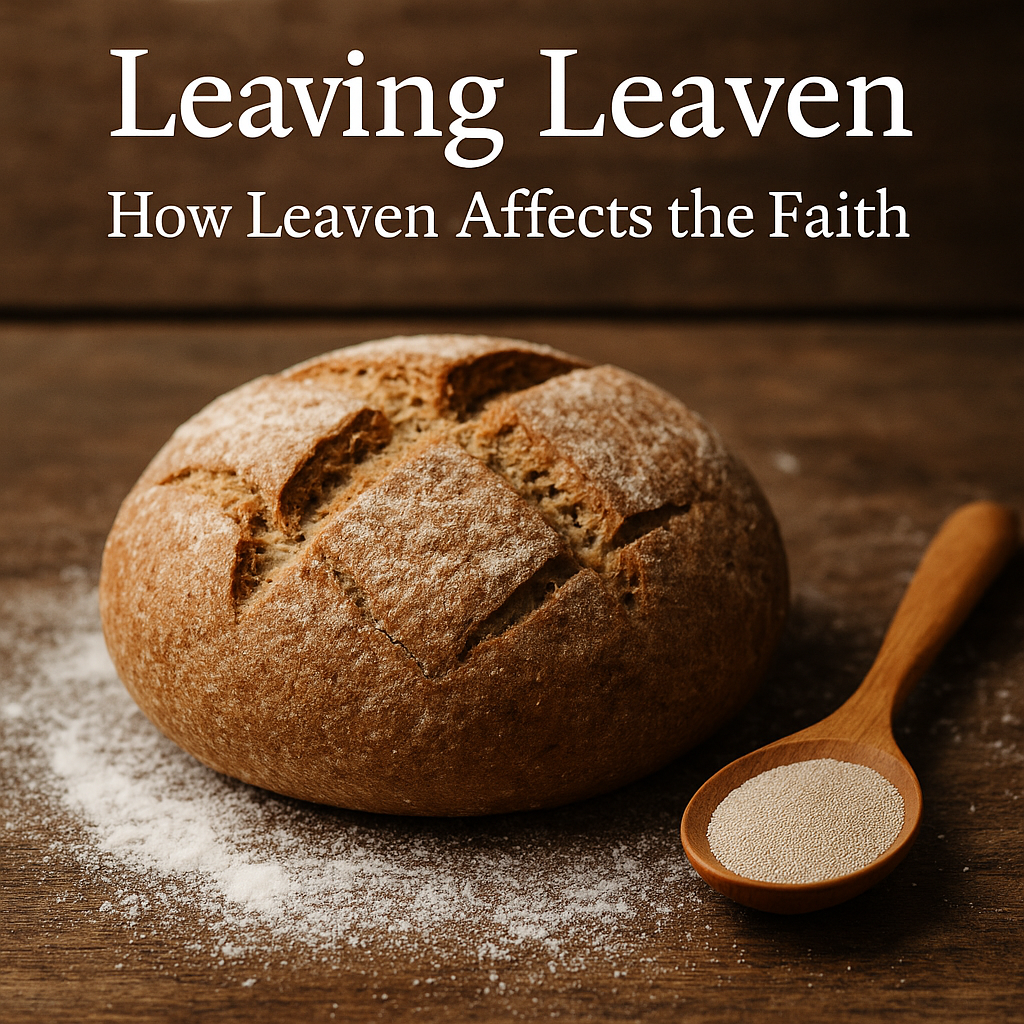
I stood in the kitchen watching my wife tend to her sourdough—what an interesting thing to have: living bread in my kitchen. Some even give their sourdough playful names like Clint Yeastwood or Bread Pitt. Some people take their dough to work just to fold it, treating the life of the bread as an adventure in itself.
I, however, took a different interest in the dough. I thought about what Scripture says about leaven.
Exodus 12:15 (NASB):
“Seven days you shall eat unleavened bread. On the first day you shall remove leaven from your houses, for whoever eats leavened bread from the first day until the seventh day, that person shall be cut off from Israel.”
Leaven, it seems, was a serious matter in the Old Covenant. Why would the Almighty care about a little sourdough?
As we see throughout Scripture, when God speaks of bread and yeast, He is rarely speaking about literal bread or yeast. Instead, He is pointing to something symbolic—something that affects the heart and the faith of His people. That is what I think about when I see the crunchy moms making sourdough: the living yeast is not the problem; the symbolism of leaven creeping through and puffing up bread is the warning we should heed.
The Symbolic Warnings of Christ
Jesus Himself spoke repeatedly about leaven, using it as a metaphor for spiritual corruption:
- Matthew 16:6, 11–12 (NASB):
“Watch out and beware of the leaven of the Pharisees and Sadducees.” - Mark 8:15 (NASB):
“Beware of the leaven of the Pharisees and the leaven of Herod.” - Luke 12:1 (NASB):
“Beware of the leaven of the Pharisees, which is hypocrisy.”
Jesus warns about three groups: two religious and one secular. Each represents a type of spiritual danger.
Throughout the Gospels, Jesus interacts differently with these groups than He does with His disciples or the common people. These groups often sought to trap Him, while others genuinely desired His teaching. Yet in every encounter, Christ’s wisdom left His accusers speechless, often rebuking them with parables that exposed their pride and hypocrisy.
Why did they fear Him?
- Herod feared Him because the people called Him the King of the Jews.
- Pharisees feared Him because He exposed their outward religiosity and hollow rituals.
- Sadducees feared Him because He threatened their authority, priesthood, and temple system.
We see these same patterns today.
Modern Parallels
Pharisees — Hypocrisy and Outward Religion
The Pharisees valued appearances over the heart. Outward law-keeping replaced inward love for God (Matthew 23:27–28). Faith became performance rather than transformation.
Modern examples:
- Legalistic Protestant groups or Roman Catholic communities where ritual overshadows personal faith.
- Clergy or televangelists preaching holiness while exploiting the poor to fund material obsessions.
- Religions where external practices dominate inner devotion (certain expressions of Orthodox Judaism or Islam).
Effect today: Hypocrisy drives people away from Christ and confuses seekers, making religion appear empty and performative.
Sadducees — Unbelief and Denial of Resurrection
Sadducees accepted only the Torah as authoritative and denied resurrection, angels, and the spiritual realm (Acts 23:8). Their faith became tied to ritual and political power, not eternal hope.
Modern examples:
- Liberal Protestant denominations that question resurrection, miracles, or Scripture’s authority (ELCA, PCUSA).
- Progressive Christianity or Unitarian Universalism, reducing Jesus to a moral teacher.
- Reform Judaism emphasizing culture and ethics over supernatural truths.
Effect today: This leaven makes faith appear irrelevant or purely intellectual, stripping away the hope of eternal life.
Herod — Compromise and Worldly Allegiance
Herod prioritized power, comfort, and popularity over truth. Moral compromise and fear of man replaced obedience to God.
Modern examples:
- Prosperity gospel movements blending faith with wealth and personal success.
- Mega-churches avoiding sound doctrine to maintain attendance and popularity.
Effect today: Worldly compromise dilutes truth, feeding self-interest rather than fostering obedience to God.
The Lesson for Believers
We see leaven working today in hypocrisy, unbelief, and compromise. These are not followers of Christ—they are followers of themselves, seeking status, power, and wealth rather than the kingdom of God.
Galatians 5:9 (NASB) reminds us:
“A little leaven leavens the whole lump.”
Just as sourdough yeast puffs up bread, spiritual leaven—pride, hypocrisy, unbelief, compromise—spreads quickly through hearts and communities. Christians are called to vigilance, to remove leaven from our own lives, and to guard our faith against influences that distort the truth.
Closing thought:
Leaven in bread may nourish the body, but leaven in the heart corrodes the soul. Let us follow Christ, keeping our faith pure, our hearts humble, and our hope firmly fixed on eternal life.

Leave a comment