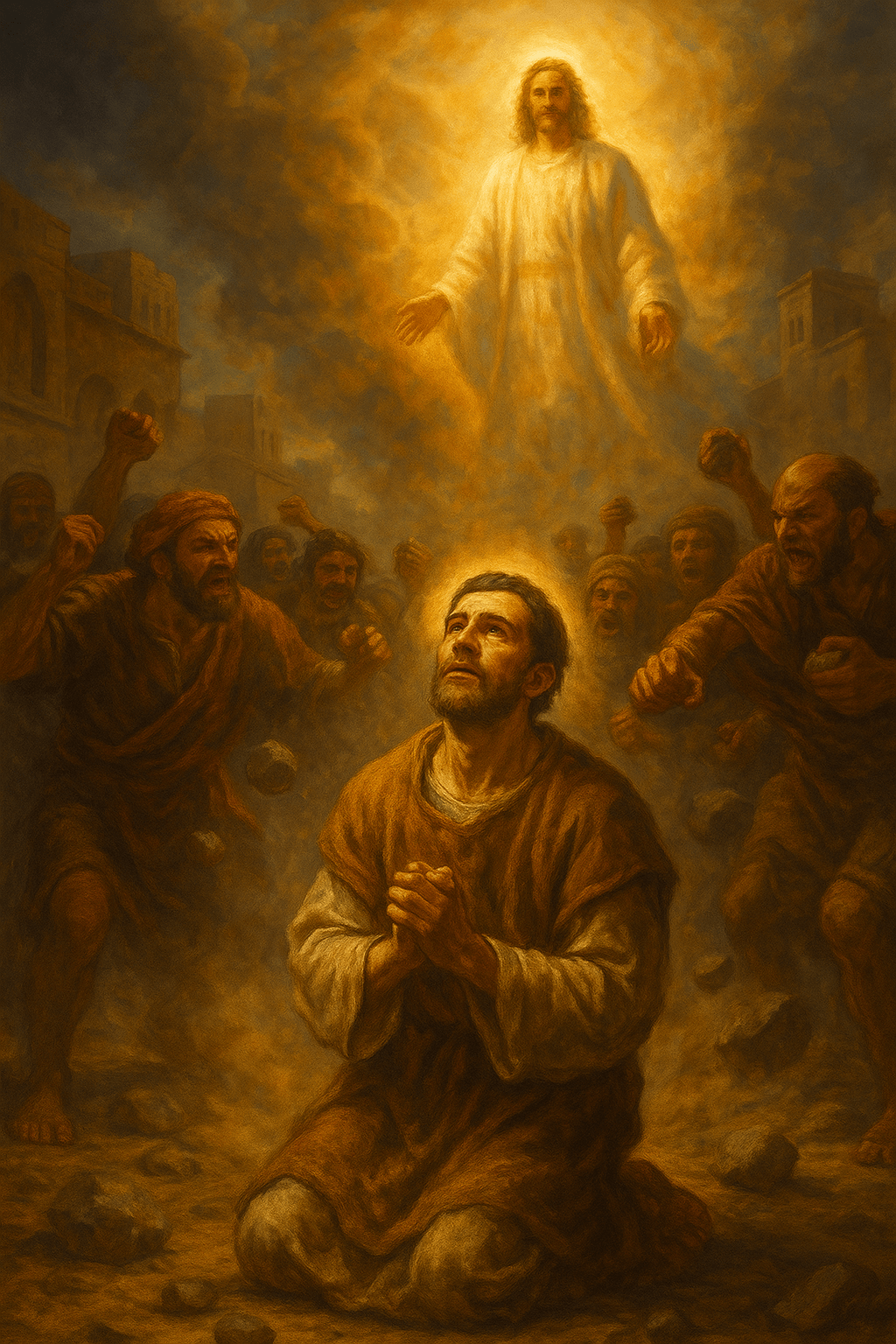
Introduction
Across the span of time, believers have searched the depths of Scripture in pursuit of its raw, endless, and eternal truth. I too have walked that path—though mine began with rough steps. Over the past seven years, the transformation in my understanding has been so profound that many of my peers would hardly recognize me.
But of all the revelations along this theological journey, the greatest by far is this: the intelligence of God is so absolute, so breathtaking, that He has delivered a gospel simple enough for the humble to grasp, yet hidden within a framework so complex that even the wisest minds cannot fully comprehend it.
The gospel is simple—but it saves only the simple in heart. Still, behind that simplicity lies a grand design, stretching across both the physical and spiritual realms. It is a thread—woven through the ages—that stitches together the soul of all things, anchoring eternity into the fabric of time.
And I imagine this: if we, fragile wanderers in this land of myths and half-truths, could catch even a glimpse of the realm of Yahweh’s Spirit, we might finally make sense of our world and the deeper meanings behind it.
It is to our good fortune that some men have caught such glimpses—and these are their stories. First we must lay the ground work. The following are the rules by which we will tell these stories. The following is the scriptural lens through which we will peer through the dark glass of eternity.
The Framework: Five Pillars
1. The Origin of Prophecy Is Spiritual flowing from God’s Eternal Perspective
Many claim to be prophetic—men who insist they can predict the future or outline coming events with precision. They reduce prophecy to a timeline: charts, symbols, and dates. To them, prophecy is man-centered, an act that men perform to reveal man’s future.
But I want to challenge that framework.
Prophecy is not merely foretelling events—it is the window through which we glimpse the eternal. It does not originate in man; it originates in the mind of God, outside of time, and is revealed to man by grace.
“There is a spirit in mankind, and the breath of the Almighty gives them understanding.”
— Job 32:8, NASB
To treat prophecy as a codebook to unlock or a puzzle to piece together by human effort is to miss its very essence. No timeline, chart, or symbolic formula can capture what the prophets truly saw when they peered beyond the veil. Prophecy is not primarily about what’s next—it’s about who reigns.
“At the beginning I declare the end,
And from ancient times things which have not been done,
Saying, ‘My plan will be established,
And I will accomplish all My good pleasure.’”
— Isaiah 46:10, NASB
Prophecy lifts our eyes off ourselves and directs them toward the One who exists outside of time—the Alpha and the Omega.
“Then I fell at his feet to worship him. But he said to me, ‘Do not do that; I am a fellow servant of yours and your brothers who hold to the testimony of Jesus; worship God! For the testimony of Jesus is the spirit of prophecy.’”
— Revelation 19:10, NASB
Prophecy reveals the eternal Christ—not just events, but the divine reality breaking into time. He is not just the center of the message—He is the message. The first and the last. The beginning and the end.
2. Prophecy Reveals Spiritual Realities from Outside the Realm of Time
Prophets did not merely glimpse future events. They were moved by the Spirit of Yahweh to speak what no natural mind could conceive and no earthly logic could produce.
“For no prophecy was ever made by an act of human will, but men moved by the Holy Spirit spoke from God.”
— 2 Peter 1:21, NASB
When Isaiah, Ezekiel, Daniel, and John prophesied, they did not simply chart the progression of human history. They were caught up into the spiritual realm—where dragons rage, beasts rise, scorpions wear the faces of men, and glory fills temples not made with hands. These images are not fantasy, nor are they just metaphors for geopolitical events. They are revelations—threads linking the physical world to the spiritual reality that shapes and defines it.
These men saw what could not be explained in human terms, and what they wrote was not just about “what’s coming,” but about “what always is.”
Consider Genesis 3:15:
“And I will make enemies of you and the woman,
And of your offspring and her Descendant;
He shall bruise you on the head,
And you shall bruise Him on the heel.”
— Genesis 3:15, NASB
Or Revelation 13:8:
“…the Lamb who has been slain from the foundation of the world.”
— Revelation 13:8, NASB
Neither of these is about a date on the calendar. They are glimpses through the dimly lit window of eternity. They reveal a war that transcends time and a sacrifice that predates creation itself.
“For now we see in a mirror dimly, but then face to face; now I know in part, but then I will know fully, just as I also have been fully known.”
— 1 Corinthians 13:12, NASB
Prophecy reveals what exists beyond chronology. It draws us into the tension between the visible and the unseen. It anchors us to the reality that what happens here is a shadow of what exists eternally.
3. Temporal Fulfillment Is Evidence of the Thread Binding Eternity to the Physical
To take such a one as the Son of the Living God and tie Him to physical, temporal history—prophecy is not merely required to predict; it is required to incarnate.
Each prophetic fulfillment is not the climax of a timeline—it is the shadow cast by the eternal Light just around the corner. Fulfillment is not the end of prophecy; it is the echo of eternity resonating in time. The birth, life, death, and resurrection of Jesus Christ are not random historical events—they are the materialization of heavenly truth in earthly form.
“And the Word became flesh, and dwelt among us; and we saw His glory, glory as of the only Son from the Father, full of grace and truth.”
— John 1:14, NASB
Prophecy does not point us forward to mere events; it points us inward and upward to a Person. Each fulfillment draws back the curtain for a moment, revealing that the physical is not isolated from the spiritual—but sewn into it.
“Now all this took place so that what was spoken by the Lord through the prophet would be fulfilled:
‘Behold, the virgin will conceive and give birth to a Son, and they shall name Him Immanuel,’ which translated means, ‘God with us.’”
— Matthew 1:22–23, NASB
This is the thread—the testimony of Jesus—binding the eternal to the temporal, heaven to earth, Spirit to flesh.
“But when the fullness of the time came, God sent His Son, born of a woman, born under the Law…”
— Galatians 4:4, NASB
Fulfilled prophecy is not a signpost at the end of a trail; it is a footprint left in time by the feet of the Eternal One.
4. The Danger of Mistaking the Shadows for the Substance
When prophecy is reduced to a mere timeline of earthly events, we risk idolizing the shadow rather than beholding the substance. In doing so, we trade the eternal footprints of our Savior—etched in the sands of time—for meaningless charts, speculative doctrines, and hollow applications that obscure rather than exalt the Most High, Jesus Christ.
“These are a shadow of what is to come; but the substance belongs to Christ.”
— Colossians 2:17, NASB
The goal of prophecy is not fascination—it is revelation. Not to feed our appetite for secrets, but to awaken us to the supremacy of Christ.
The faithful are not merely survivors of judgment—they are already reigning:
“And they came to life and reigned with Christ for a thousand years.”
— Revelation 20:4, NASB
The saints are not waiting to be sealed—they have been sealed:
“In Him, you also, after listening to the message of truth, the gospel of your salvation—having also believed, you were sealed in Him with the Holy Spirit of the promise.”
— Ephesians 1:13, NASB
Babylon is not just a future threat—it is a present reality:
“And on her forehead a name was written, a mystery: ‘BABYLON THE GREAT, THE MOTHER OF PROSTITUTES AND OF THE ABOMINATIONS OF THE EARTH.’”
— Revelation 17:5, NASB
Why do we so desperately demand that prophecy tell us the future, when the One who holds the future has already told us everything we need?
“Do not let your hearts be troubled. Believe in God, believe also in Me. In My Father’s house are many rooms… I go to prepare a place for you… I will come again and receive you to Myself.”
— John 14:1–3, NASB
What promise could be greater than this?
Let us not idolize prophetic events. Let us preach Christ. Show Christ. Shine Christ.
“For it is God who said, ‘Light shall shine out of darkness,’ who has shone in our hearts to give the Light of the knowledge of the glory of God in the face of Christ.”
— 2 Corinthians 4:6, NASB
And let us do so by the same Spirit who raised Him from the dead.
5. True Interpretation Aligns Us with the Unseen, Not Just the Unfolding
“Now faith is the substance of things hoped for, the evidence of things not seen. For by it the elders obtained a good report.”
 — Hebrews 11:1–2, KJV
When we flatten prophecy into dates, timelines, and physical events, we lose the larger picture—the heavenly picture. Scripture was never meant to be a codebook for tracking political history. It was written to draw us into the mind of God and to align us with unseen realities.
Do you not know there is a spiritual realm?
“For our struggle is not against flesh and blood, but against the rulers, against the powers, against the world forces of this darkness, against the spiritual forces of wickedness in the heavenly places.”
— Ephesians 6:12, NASB
There are real wars—unseen but literal—fought between angelic beings and principalities. The Ark of the Covenant was not an isolated artifact of the wilderness; it was a shadow of a heavenly reality:
“…who serve a copy and shadow of the heavenly things, just as Moses was warned by God when he was about to erect the tabernacle…”
— Hebrews 8:5, NASB
In Job, we read that the sons of God came before the throne—and Satan came with them (Job 1:6). This wasn’t a metaphor. It was a spiritual event, unseen by men but recorded for us.
So when someone says, “We should take the Bible literally,” I ask: What do you mean by literal? Because the spiritual is literal. Angels are real. Thrones are real. Principalities are real. The Lamb slain before the foundation of the world is not symbolic poetry. It’s reality.
Let us also not confuse spiritual truth with personal emotion. Fairy tales are born from the imaginations of men. Prophecy, by contrast, is born from the mind of God. It is timeless—breaking through the veil of time not to tell us how history plays out, but to remind us that history is not the main story.
“For the things which are seen are temporal, but the things which are not seen are eternal.”
— 2 Corinthians 4:18, NASB
To rightly interpret prophecy, we must seek alignment—not just with unfolding events—but with the unseen eternal realities that give those events their meaning.
Why This Matters
If this framework is correct, it changes everything:
- We no longer treat Revelation like a puzzle book, but as a window into eternal realities.
- We stop asking, “Where are we on the timeline?” and start asking, “Are we bearing the name of the Lamb or of the beast?”
- We stop arguing over whether prophecy is literal or symbolic, and begin to recognize that it is both—literal in the heavens, and symbolically breaking into earth.
This is not spiritualizing prophecy.
It is re-centering prophecy in the Spirit.
Where This Leads
This paper lays the foundation for what follows: a systematic walk through the major prophecies of Scripture—each reinterpreted through the lens of eternity breaking into time.
From Genesis 3:15 to Revelation 22, we will uncover:
- Not just what God said would happen,
- But what has always been true in His world—now being made manifest in ours.

Leave a comment